Wednesday, 19 November 2025


 Demographic Dynamics of Indian Democracy

If the body of a nation is formed by its people, its democratic soul gets shaped by its voters. However, in its nascent stages, it was not the case for the lesser souls were unfranchised, robbing it of its egalitarian ethos. But has the later-day all-adult franchise helped it acquire its representative character? Not necessarily, as the elaborate democratic exercise in India (a continuing civilization of over five millennia), involving a complex mix of over 990 million electorate, of regional and ethnic diversity (28 states and 8 union territories; 705 scheduled  tribes and 2,000 ethnic groups), religious and linguistic variations (six religions in the main and scores of tribal traditions; 121 languages and 19,000 mother tongues/dialects) besides social and economic disparities not to speak of the mindboggling caste divisions (3,000 castes and 25,000 sub-castes) across the regions, indicates.

Even though democracy, in any form, is a number game everywhere, its Indian version is numerically enormous, demographically divisive and politically fragmented like nowhere else. Even then, the competing political outfits spare no efforts to woo the electorate to the polling stations in what is arguably the most daunting of the daunting political exertions in the democratic world. It’s as if to prove itself equal to this herculean democratic task, the electoral apparatus of the state pulls out all the stops to maximise the franchise by way of its voter-friendly, state-of-the-art election process. But yet, some one-third, or so, of the rural and around half of the urban electorate invariably stays away from the periodic polls, characterised by Prime Minister Narendra Modi as the ‘festivals of democracy’. However, on the face of it, it may seem that nothing could be amiss in this sort of sub-par electoral show for the voting patterns of the absentee voters would have been in political consonance with the collective electoral will of the participative millions.

Nonetheless, a closer look at those who choose to vote and those who prefer to abstain would reveal that which the sizeable electoral numbers fail to bring to the fore - the demographic dynamics of the Indian democracy. In one of the many ironies of the Indian republic, even though the Muslim ummah far outstrips every Hindu caste group there is and the Christian converts (counting the closet characters) outnumber each of the Hindu sub-castes, yet both are prioritised as minorities in its ‘secular’ set-up! So, to put things demographic in the prevailing democratic order, one has to juxtapose the nearly unified 15% Muslim and 5% Christian mandate with around 80% caste-ridden Hindu franchise that the sub-castes and the tribals fracture further.  

More to the point, even as the bulk of the absentee voters happen to hail from the Hindu electorate, the Muslims and the Christians, given their religio-political attitudes, queue up to vote against the proponents of Hindutva, namely the advocates of the Hindu cultural renaissance, read Bharatiya Janata Party and its political associates. It’s thus, in India’s multi-party democracy that entails multi-cornered electoral contests, any one of the relatively populous caste groups, in cohorts with the one-fifth Muslim-Christian voters-combine, can become a dominant political force in a given region. What’s worse, making a mockery of the democratic level playing field, such an unhealthy political nexus can come up trumps at the hustings in conducive states by co-opting a few of the ‘one-or-two percent’ caste groups to the detriment of the rest of the populace, as exemplified by the infamous Muslim-Yadav combine in the states of Bihar and Uttar Pradesh.  

That happenstance is owing to the fact that in the rural electoral arenas, it is the socially dominant castes and the politically affiliated voters that turn up most at the polling stations to protect their social clout or to retain their political hedge, and/or both, in their respective domains. However, on the contrary, numerous miniscule castes and various sub-castes, with no socio-political turf of their own, and left to fend for themselves by the competing political outfits for the same reason, constitute the bulk of the rural electoral absentees. But when it comes to the urban electorates, their diverse socio-economic compositions render them unamenable for any large-scale rural-type caste consolidations, and that partly explains the abysmally low urban voter turnouts. Besides, as the urbanites are largely salaried or self-employed, ineligible subjects of the state’s politically expedient beneficial schemes, they fail to become the objects of the political wooing. It’s thus, besides being unaffected by the electoral outcomes, as they remain unsolicited by the political parties, they tend to give a short shrift to the polling process, and bring democratic disrepute to their adopted constituencies.  

That’s not all as political dynasties, false poll-eve promises, endemic mis-governance, pandemic mal-administration and unabashed corruption that came to characterise the Indian democratic order have given raise to widespread public apathy and attendant voter cynicism. So, such of those have come to see the periodic poll process as a futile exercise of choosing between a Tweedledum of a Gog cabal and a Tweedledee of the Magog gang. Not that all of them have no axe to grind, it’s just that they don’t have a grinding stone for that. But still, by not being a part any of the self-serving caste groups, they, with their cumulative votes, would be able to make a qualitative difference to the collective franchise. Hence, it is imperative to impress upon them that as their self-interest is entwined with the national interest, they must back only those political forces that are wedded to the nation’s good. However, though this holistic dictum is applicable to one and all, it is better spread among the poll-shy electorate, in every conceivable manner, by the well-meaning individuals, social entities and political outfits.

Now that Narendra Modi has managed to rekindle vande mataram’s nationalist flame, singed by Jawaharlal Nehru at the outset, it is left for social servers such as Rashtriya Swayam Sevak Sangh and political forces like Bharatiya Janata Party to take the lead in bringing the nation back on the patriotic path so as to put its voters on the right political track. No denying that given India’s putrid political state and its tattered moral fabric, it is no mean a task, but the need of the nation is that all its patriots must apply their minds to come up with ideas that could facilitate the same.  Needless to say, the ways of convincing the rural folks and the urban dwellers about the ill effects of caste politics on the nation and by extension on themselves would necessarily vary – personal interactions with the former and mass communication with the latter – the message being the same – Better our Bharat, better you are; so better vote to better Bharat.


Labels: , , , , , , , , , , ,

Sunday, 18 July 2021

Decoding the Cynical Method in Mamata’s Political Madness


Ernst Röhm, the boss of Brown Shirts, whose rough shoulders carried Adolf Hitler into the German Chancellery, was keen to induct them into the Wehrmacht that was set to replace Reichswehr. However, the Fuehrer, whose vision was to develop a world-beating armed force, saw no role for Röhm’s riff-raff in its professional setup. But as the rebuffed deputy could unleash his Storm Troopers on his regime itself, the real politic constrained the Nazi numero uno to usher in the Night of the Long Knives but for which, the rights and wrongs apart, the Third Reich wouldn’t have had such a formidable army with the Panzers at its helm.    

That was in the early thirties of the last century and now in the nascent twenties of the current one, India’s West Bengal faced a Röhm moment as Mamata Banerjee, the Trinamool supremo, led her party to a resounding victory in the assembly polls, however, fouled by her personal loss at the hustings. Thus, while Narendra Modi, the Prime Minister, and Amit Shah, the Home Minister, who together led a no-holds-barred poll campaign to uproot the unruly Trinamool, have been licking their political wounds and counting their electoral losses, one would have expected Mamata Didi, who had the last laugh by remaining in the saddle to prove the Bengal electorate right that is courtesy the country’s constitution, which enabled her to take another shot in a by-election, to be conciliatory to her opponents. But then, she has to contend with her formidable support base of the aggressive Muslim constituency that she cultivated for electoral aggregation that came to perceive the Trinamool victory as a license to pursue their extremist Islamist agendas, and so began to run amuck amongst the Hindus, who sought to spoil their party by voting for Modi’s Bharatiya Janata Party (BJP). That was the Röhm moment for Mamata, which put her in a catch- 22 situation of her own making.

Well, she could only rein in the rampaging Muslim miscreants, euphemistically called Trinamool goons by the compromised Islamapologic media, at the cost of imperiling her solid vote-bank of roughly one third of the State’s electorate. Besides, with her extreme-Muslim-appeasement governance model, she had already burnt most of her electoral bridges with the majority of the Bengali Hindus, save the supercilious Bhadralok, who seem to take pride in swimming away from the pan-Indian political mainstream. This aspect of the Bengal’s political reality was underscored by her electoral loss at Nandigram, albeit by a narrow margin, to Suvendu Adhikari, her confidante turned contestant, who meaningfully dubbed her as Begum in his election rallies.  

Thus, with her political survival inexorably linked to the formidable Muslim constituency, unceasingly buttressed by the successive pseudo-secular administrations of varied hues and cries that turned a blind eye to the hordes of Muslim intruders from the neighboring Bangladesh, she was caught in a demographic quagmire. That in her Muslim-engineered electoral triumph, the minimal contribution of the overwhelming, though fragmented, Hindu majority is a cause for her future political worries cannot be over stated. That being the case, getting tough with the Muslim miscreants out at the Hindu throats could tantamount to her denting the minority vote-bank, which would be nothing short of a political suicide in the democratic arena.  Even otherwise, there is a strange compatibility between Mamata's roguish behaviour and Muslims' aggressive mentality that make them made for each other, which fact she seems to have recognized only after coming to power in 2011 by storming into the Left citadel over the industrial ruins of Singur. Why, in 2006, she made a ruckus in the Lok Sabha over the Speaker's rejection of her adjournment motion on illegal infiltration of Bangladeshis into West Bengal!

Though she retained power in 2016, despite her lackadaisical governance, the spectacular performance of the BJP in the 2019 parliamentary polls made her rush to the poorer women with all sorts of sops to shore up her scam-ridden Trinamool in the ensuing 2021 assembly polls. Nevertheless, BJP's high pitch campaign in them made her nervous to the core, so much so that she opted to migrate from her shaky Bhowanipore constituency to the safe Muslim-profuse Nandigram, in part driven by her egotistic urge to crush Suvendu Adhikari to his political death, well, to come a cropper. However, during the month-long election regimen, what with the vexed Hindu wind seemingly turning against her and her party men, she turned to the Muslim voters with folded hands not to split their votes in favour of the other secular pretenders and that earned her a reprimand from India’s Election Commission.

However, if only she had a grasp of the Islamic psyche, there was no need for her to go to such desperate communal lengths as Muslims anyway would strive to ensure BJP's defeat, not because its rule materially hurts them as in deed their kin in Modi’s Gujarat became a prosperous lot. What is not adequately appreciated is that the Muslims, who perceive themselves as the erstwhile rulers of Hindustan, feel emotionally slighted to be ruled by it that unabashedly espouses the Hindu causes.  It was thus, aided by the Muslim hatred towards her rival and her sops for the poor, her Trinamool once again steamrolled into the corridors of Nabanna, the seat of the State power.    

Though the agenda-driven media, so as not to give any leg up to the hated Narendra Modi, downplayed her Nandigram debacle, she was so rankled by it as to make William Congreve's words ring true - heaven has no rage, like love to hatred turn'd, nor Hell a fury like a woman scorn's. Thanks to the electronic voting machines, as it was apparent that her humiliation was owing to the hostility of the Hindu voters, anyway the post-poll targets of her Islamist supporters, how does the question of their rescue arise? Her personal pique apart, there is real politik at play as well for what if the momentum of the adverse consolidation of Hindu voters that began in seventy-seven constituencies in 2021 picks up in the rest of them in the future; more in Bhowanipore from where she is all set to contest to retain her chief ministerial chair, and in 2024 parliamentary polls in which she hopes to pitch herself as the opposition’s prime ministerial candidate. So, as offense is the best form of time-tested defense, go after the Hindus, who dared to vote for the BJP, to make an example of them so that none ever dares to repeat the mistake in their living memory, seems to be the cynical method in Mamata’s political madness.  

Thus, in such a setting, as the election commission dutifully conducts future elections in West Bengal, the vulnerable Hindu voters, who are averse to Trinamool, would keep away from the polling booths thereby facilitating Mamata and / or her successor to lord over it till such a time when the Muslim minority becomes its electoral majority to be able to eventually ensconce its members in the seats of power. Why doubt that as the short-sighted Mamata is sure to open the long Bangladeshi borders to further augment her vote-bank to counter the Hindu apathy towards her, and hasn’t one of her Islamist worthies recently proclaim that once Muslims reach the thirty percent threshold in India there would be four more Pakistans? That is apart from the avowed goal of every sub-continental Musalman to turn Hindustan into Ghazwa-e-Hind. 

So, even as the colonial British dismembered India, its regional satraps such as Mamata, if not reined in, in time, could cause its further fragmentation with impunity. No denying that the Modi-sarkar can deservedly pat itself for having reined in the separatist forces in the Kashmir valley but what about the out-of-control West Bengal and the Christian surge in Andhra Pradesh, estimated to have already covered over a quarter of its population, making it a fertile ground for the Mamata model of politicking, if need be.  The tragedy of India hitherto is that all political dispensations across the board, barring the honorable exception of the BJP, have been aiming for a share in the minority vote-bank and thus were not averse to the inimical demographic alterations, be it the form of Bangladeshi Muslim infiltration into West Bengal and Assam or the local Christian conversion sprees in Andhra Pradesh, Tamil Nadu etc. Well, it may be tempting to fault the late YS Rajasekhar Reddy and his son YS Jaganmohan Reddy, chief ministers both, for systematically Christianizing the Hindu hinterland in Andhra Pradesh but Chandra Babu Naidu, who was in a political position to checkmate their evangelical moves is to be equally blamed for having turned a blind eye, eying some electoral crumbs from the High Christian table, and sadly, BJP that could have stalled the religious disorder has had no political ground there whatsoever. 

 What of now to avert further demographic distortion of Bharat that is India? To start with, BJP must begin a public awareness drive within and without West Bengal about the perils posed by the Trinamool politics to the unity and integrity of the country. It also needs to build public opinion to force the Indian media to put an end to the pseudo-secular political correctness that somehow came to rule the nation’s public discourse. It should strive to develop an intellectual climate conducive to reviewing the fact-checked demographic changes and the socio-political implications thereof. Besides, Modi-sarkar should devise methods to bring India’s substantial religious minorities into the national emotional fold resulting in the diffusion of their separatist identities, which, in turn, would dent their religious zeal to bring others onto their sectarian paths.

However, in the short-run, the onus is on the Me Lords of the Supreme Court, who have come to fancy themselves as the sole-protectors of the Indian democratic order, to nip Mamata’s political disorder by banishing her from Bengal’s electoral arena to make an example of her to dissuade others from embarking upon the dangerous course set by her, and the Indian Constitution does grant them that extraordinary power.


Labels: , , , , , , ,

Sunday, 27 October 2019

Underbellies of Indian Polity


Winston Churchill felt that the Indian polity was not ripe enough for independence but Mahatma Gandhi pressed for swarajya nevertheless. Some fifty-five years after Atlee freed India off the British colonial yoke, what is the bottom line of the world’s largest democracy? Barring the brief aberration that was the internal emergency imposed on it by Indira Gandhi, India, has been cruising on the path of democracy. That is about the physicality of going through electoral motions but what about the cerebral quality of the Indian democratic output? The cheerleaders of the Indian democracy cite the shining examples of its electoral maturity in avenging Indira for her emergency and dumping the Janata Party for its insipid rule. Oh, how the wonderful Indian voters routinely dump the haughty in the dustbins of anti-incumbency and where else on earth does democracy shine ever so bright, and such, tend to shape the grand narrative.

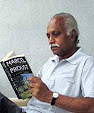
Was Winston wrong then? No for doubts arose soon as the electorate tended to vote on caste lines and communal contours only to be cemented as voters, in the wake of Indira Gandhi’s assassination, swayed by emotion, swamped its 8th Lok Sabha with Congressmen. But the clinching evidence that Churchill was doubly right came a little later. The first real test Indian democracy faced was when PV Narasimha Rao (in the picture) sought a mandate from his electorate for a second term in office. That is after he, in an amazing turnaround, ably assisted by Dr. Manmohan Singh, had not only retrieved the Nehruvian India from its License- Raj mess but also laid a new economic keel for India’s prosperous sail. That apart, with the view to be seen as the crusader against India’s entrenched corruption in the public life, he went all the way to prosecute the accursed politicos across the board political spectrum, albeit at the directive of the country’s top judiciary. But how did the Indian electorate that cries hoarse against political corruption in the higher echelons respond to his willingness to tackle it? Simply put, it paid him a deaf ear. And that was about the rank ingratitude of the Indian voters to their leader who had unshackled them from the prolonged permit period to alter India’s economic face forever for good.

By their mindless rejection of a known performer, what the Indians gave to themselves and their country was the ineffective rule of a Deve Gowda on the one hand and on the other the ugly phenomenon of Sitaram Kesari that inevitably led to the repossession of the congress party again by its dynasty-in-the-retreat, by then headed by the Italian Sonia Gandhi nee Antonia Maino. It was another matter though that Rao’s failed gambit earned him a lot of bad blood in his own party that made him run around Delhi’s courts, to clear himself of the charges of misdemeanors leveled against him; and it was a matter of satisfaction to his tormented soul that he got a clean chit before life ended it all for him in his forlorn state.

The results of the second test the Indian democracy faced are just out. Though the question was repeated, ironically, the answer remained the same, proving that the Indians did not become any wiser during the worrisome interregnum. Prime Minister Vajpayee not only stemmed the tide of the political instability at the center that the earlier electoral exercises occasioned but also broke the barriers in the hitherto neglected infrastructure development in the country. If in Narasimha Rao the country perchance found the right man for the right job at the tight time, Vajpayee worked his way to the top post by cultivating the political sagacity to handle the onerous task of coalition management in a fractured polity. Yet, the electorate thought it fit to cold-shoulder him.

What then is the truth, really? Wouldn’t the past testify to the fact that the Indian voter is more of an emotional kind than the thinking type? Take away the anger against an emergency, the jingoism of a victory, the sympathy of an assassination or the apathy against incumbency, what one gets to see that which governs the Indian voters’ ballot mind – nuclear thought. It can be said without any contradiction that the Indian voter has the ability to identify himself only with his caste, region, and religion without an iota of a notion about the notional interest. Blame it on Nehru for he only put paid to Indian nationalism perceiving it as a threat to Muslim minority’s religious-identity. And he lived long and ruled enough to stall a pan-Indian electoral chemistry to the good of the Indian democracy. The Nehruvian perversion to nurse Islamist separateness in the bosom of the residual India forever ensured its Hindu-Muslim electoral divide. Besides, he had allowed the precipitation of the electoral division of the Hindu majority, on the basis of caste and creed, for his party’s perpetual political gain. It is thus, the unsophisticated Indian voter forever fails to unhinge his franchise from the communal and casteist calculus. Also, Nehru’s inculcation of radical secular ethos in the Indian intelligentsia, nursed by wooly liberal leanings, ensured that the Hindu majority’s impulses were seen reprehensible to his idea of India.

Alternately, Hegdewar’s vision of India with Hindutva as the binding material to hold the Hindu social edifice, built with deviant caste bricks, from sundering, though impeccable, was faulty in its positioning for his concept of the Hindu social reengineering was postulated as a means to counter the perceived Muslim communal threat. Though one would have expected the Indian intelligentsia to fine-tune Hegdewar’s laudable unity of the caste-ridden Hindu society per se, the wooly intellectuals, not known for doing their homework properly, badmouthed a good idea and sought to throw out the baby with the bathwater. It would have given them an idea as how to go about it if only they had contemplated on what Swami Vivekananda had advocated - the Hindu soul in an Islamic body -  to bring about an Indianness in the hopelessly divided polity on the fracturing lines of caste, region, ethnicity, language etc. But yet, India’s shortsighted intelligentsia exploits this postural flaw (since rectified by the sangh parivar) to brand Hindutva as the communal agenda of the Hindu far right, inimical to the country’s minorities, has only steeled the Islamic fundamentalism of the Muslim Indians. It’s thus the vacuum created by the un-nationalism occasioned by Nehruvian idea of India has come to be filled by communalism, regionalism, casteism, favouritism, nepotism, corruption etc. to hurt Bharat but to benefit of mediocre.

While Nehru, blinded by his own sophism, failed to foresee the true merit in Indianness to bring about a political cohesiveness in the majority population to further the national good, neither Hegdewar nor those that subscribe to his ideology failed to dispel the misgivings of the minorities, and the majority alike, about the true intent and character of Hindutva. Be that as it may, though a well-meaning Hindutva would be beneficial to India as a whole, unfortunately, the opportunistic political class that sees electoral benefits in feeding upon the caste and communal susceptibilities of the polity pooh-poohs it, that is even after it acquired a secular tag from India’s Supreme Court. But then that suits a Lalu in Bihar and a Muluyam in U.P to ride on the Hindutva bogie in the Muslim mohallas all the while stitching their caste votes together to own 1/10th or so of the Lok Sabha. What if more such characters emerge all over India to dominate the sub-regions of its vast terrain by caste combinations? Would ever a national policy be possible with each regional satrap catering to the interests of the caste groups of his own narrow constituency? As if the politicians are not doing enough damage, the so-called spiritual leaders like Chinna Jeeyar are spreading sectarian sentiment amongst the Hindu majority with impunity! Indeed, the British did divide India much less!

What then does Indian Verdict - 2004 mean? The claim of the Congress that it was a mandate for Sonia is understandable though the media’s seconding the same is perplexing. In fact, the media’s dubbing the party’s hold on 145 Lok Sabha seats, out of 543 elected ones, as a people’s mandate for her makes it amusing. The Indian media that never gets tired of heaping praises upon the literate Kerala voters, for once, has muted itself as the Congress came a cropper with a cipher. What did the Kerala voters convey after all? Was it not a nay to Sonia? Then, what about the much-touted Karnataka voters that supposedly differentiate an assembly ballot from the parliamentary franchise? They too would not fit in the mandate for Sonia frame for they did not echo to the Congress tune this time. If the Tamil voters were asked to raise their hands for Sonia’s ‘Hand’, how many hands would have risen but yet, all their MPs were all set to help her rule the Indian roost. The Andhra voters, rightly or wrongly, voted out the incumbent CM’s MLA-hopefuls but by turning the applecart of TDP MP’s, were they clamoring to see Sonia anointed as India’s PM? Doubt for while pressing the EVM’s Congress button in the Parliamentary booth, their ire would have been still on their CM. It’s by such hands as these that the great Indian mobocracy, sought to be glorified as the world’s largest democracy, has come to be nursed! Yet, the lengths to which Indian media goes to build the myth of India’s electoral maturity is exemplified by The Hindu’s editorial that tried to reconcile the victory of the left in Kerala and the drubbing of Sonia’s party there in the same vein as the verdict for a Secular arrangement at the centre!

Above all, as the backdoor to 7, Race Course Road was seemingly nudged open to Sonia by a quirk of fate, wonder at the gall of her backers in making bold to proclaim her ‘non-existing mandate’ to rule. It’s another matter that in the electoral arena, they all were shy to project her as the candidate for the top post. In the final analysis, the very fact that Sonia was able to dream of even grabbing India’s premier political post proves that its democratic curry lacks electoral savvy. Coupled to the caste-obsessed and faith-driven electorate, it is the Left’s ideological Hindu-hatred and the regional satraps’ survival instincts that tried to catapult her to the summit. After all, for the Indian Left that swears by Lenin and Mao, an Antonia Maino on the Indian gaddi is no abnormality. Besides, the regional overlords have to guard their own backyards in the nebulous political environment. If Mayawati ties up with Sonia, won’t Mulayam’s political citadel come crashing down in UP, and how to avert that happening but by himself joining the bandwagon, never mind his principled opposition all the while for her foreign origin. Analyse and see as the compulsions of the eager become crystal clear.

Thankfully, in the end, as it was not in independent India’s fate to suffer the ignominy of being reigned by a foreigner, President Abdul Kalam came up with a constitutional hitch to spike Sonia’s ambition to become its Prime Minister. It’s another matter though that India had to endure her decade-long anti-Hindu reign through the proxy regime of a nerve-less man and unscrupulous collaborators.
-------------------------------------------------------------------------------------------------------

This is the revised edition of my “Irony of Indian Polity” published in Triveni, July – Sep 2004. 


Labels: , , , , , , , , ,

Sunday, 25 August 2019

Political Hurdle to Indian Nationalism


The raise of Narendra Modi in the Indian political firmament has brought to the fore the debate on nationalism and anti-nationalism, like never before, and that too with a rare patriotic fervor. With the unfolding events in Delhi’s Jawaharlal Nehru University, it’s as if the ‘secular’ left and the ‘Hindu’ right have drawn battle lines for what could be a decisive ideological war on the Indian patriotic front. 

While the hitherto ideologically muzzled majority is shrill over the campus ranting of ‘bharat ki barbaadi’ as an anti-national activity, the religiously-rooted minorities, backed by high-decibel left-liberals, have come to articulate that ‘Afzal teri katil zindahai’ sloganeering is just an instance of ‘free speech’, that too enshrined in the constitution. Contrast this with the universal taboo on Nazi symbolisms that ironically include the Hindu Swastika, imaginatively ‘tilted’ by Adolf Hitler for artistic effect. And all this is so long after our British colonial masters had granted us the right to breathe our own ‘fresh’ air.

If Gandhi’s Congress, in the main, conceived a social structure for free India, mainly it’s Nehru, who had designed and built our political edifice. And if a dwelling turns out to be unwieldy for living in it, blame the intellect of architect for it, but if it develops cracks, shouldn’t the builder be brought to book? And it’s a double jeopardy for India that not only the premise of the design was unrealistic but the material of construction was unsound. Before going into the genesis of our patriotic paradox, it is imperative to understand what nationalism is all about and who is an anti-national for that matter. The dictionary defines nationalism as the spirit or aspirations common to the whole of a nation and an anti national as the one who is opposed to national interests or nationalism.


Name it Bharat that is India or Ila Varta or Arya Varta, this ancient land had all along been a nation of nations as parts of it were kingdoms with distinctive political boundaries though culturally unified. That was before foreign forces came to set up their sultanates. Though the entry of the Afghans and the Turks did not sunder the land, the Islamic surge they occasioned had culturally divided the people, eventually resulting in the country’s partition for the Muslim accommodation. Add to it the British mischief that left it to the rajahs and sultans to take their fiefdoms whichever way they wanted, so to say, nipped the evolution of Indian nationalism in its bud. While an ailing Sardar’s patriotic energies were consumed in creating an Indian political entity, he died before he could infuse a national unity into it. But sadly for India, Nehru messed up Patel’s unfinished job.


What with the Muslim classes having left for Pakistan, leaving behind the Islamic masses, the supercilious Nehru took it upon himself to play the role of an unsolicited Mullah. Be that as it may, had he energized himself to improve their economic plight and rationalize their fundamentalist mindset, as he tried in case of the Hindu majority, he would have served India well. But instead, he took the easy route (the lazy man) to humour them by catering to their religious instincts and separatist psyche, thereby keeping them away from the Indian nationalist mainstream. And beginning with his daughter, Indira, as the unscrupulous politicians in the cow belt saw the electoral dividends catering to the Muslim religious sentiments fetched, never mind its inimical impact on the community at large, more so its women folks, vote bank politics took deep roots to ruin the nation that, any way, was never in the making.

The sum and substance of this political zero sum game is that it not only hinders the entry of the Musalman into the national mainstream but also stymies his personal well-being through ghettoized thinking. That Muslims should fall prey to this Machiavellian deception packaged as secularism for electoral consumption is the bane of the Indian democracy. It’s thus; the cynical secularism of the self-serving politicians that won’t allow us to inculcate the spirit and aspirations common to us as the citizens of the whole of India is the hurdle to our nationalism.


Labels: , , , , , , , , , ,